
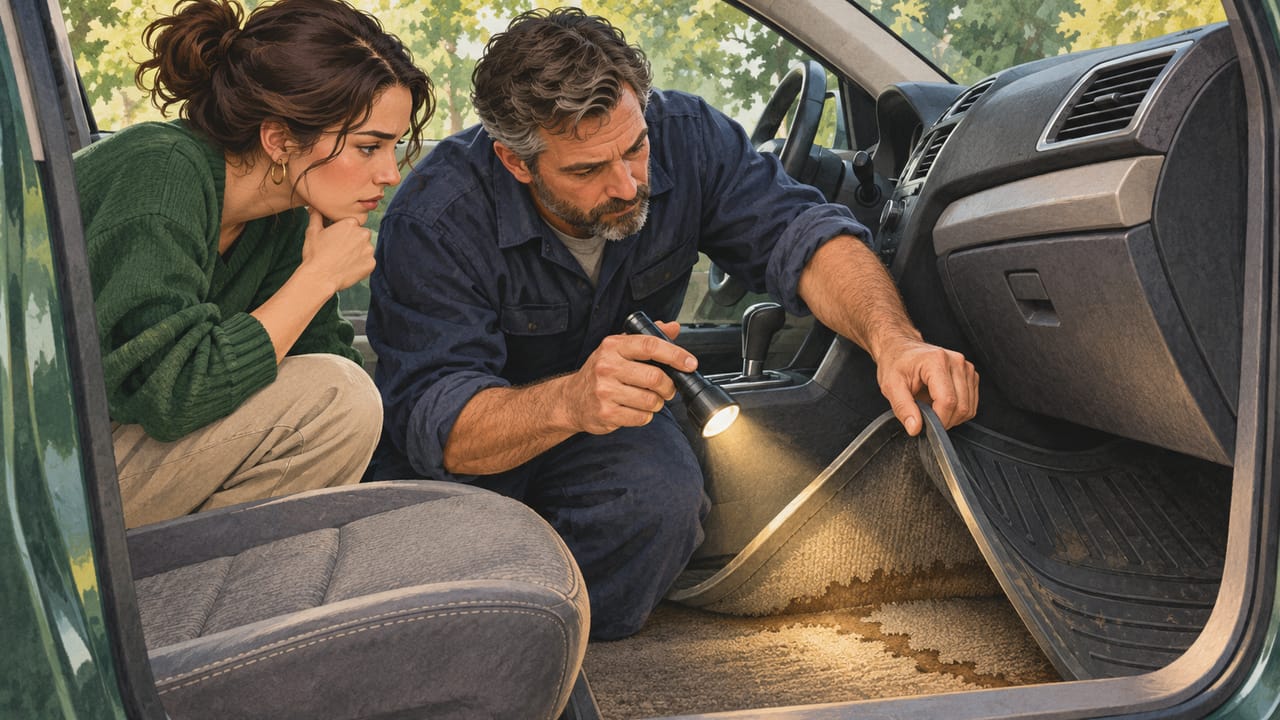
A used car can look clean and still have water damage hidden under the carpet or inside electrical components. A careful purchase combines records, a close look at the car, and an independent inspection before you commit.
Start with the VIN and the seller
In August 2026, the National Insurance Crime Bureau (NICB) warned that flood-damaged cars can return to the market far from the flood. Water can damage electrical systems, brakes, and safety equipment. Read the NICB warning.
Get the VIN
Ask for the 17-character vehicle identification number before paying for a report or traveling to see the car. Compare it with the number on the car and the title.
Ask direct questions
Ask where the car was kept, whether it was ever flooded or declared a total loss, and what repairs were made. Request records and written answers.
Arrange an inspection
Ask whether an independent mechanic can inspect the car before you sign or pay. If the seller refuses, consider another car.
A car can move between states before resale. Do not assume that a local listing means the car has always been local. A seller may not know every previous event, so treat answers as a starting point for checks.
Read the title and history together
A title brand is a label in a state title record that can indicate a condition such as salvage or flood damage. Ask to see the title and review a vehicle history report for prior states, title changes, and reported damage. See the FTC’s used-car advice.
| Check | Use and limit |
|---|---|
| Title and history report | Look for brands, title changes, reported losses, and gaps. Reports depend on information supplied to them. |
| NICB VINCheck | Free check for theft and salvage records from participating insurers. It is not a complete vehicle history. |
| Independent inspection | A mechanic can examine the actual car, including areas a report cannot describe. |
NICB says its free VINCheck searches participating insurers’ records. A missing record does not prove that a vehicle was never flooded, stolen, or seriously damaged. Enter the VIN carefully. Use NICB VINCheck.
A clean-looking title is not proof of a clean history. NICB describes title washing as moving a damaged vehicle to another state to obtain a clean title and hide its past. A flood may also never have entered the records you check. Ask the seller to explain discrepancies and obtain supporting documents.
Look for clues inside and around the car
Examine the car in good light. These signs do not prove a flood on their own, but they give you specific questions for the seller and mechanic. See NICB’s inspection suggestions.
Fresh carpet, a clean engine bay, or a single stain can have an innocent explanation. Ask for receipts and an explanation of any repairs. Do not remove trim or disconnect electrical parts yourself. Give the mechanic your observations.
Pay for an independent inspection
Choose a mechanic or repair facility independent of the seller. The FTC recommends an independent inspection even when a dealer says a car is certified or inspected. Expect to pay for the inspection and agree on its scope in advance. Read the FTC guidance.
Ask about flood experience
Tell the shop why you are concerned. Ask it to inspect accessible electrical connectors, corrosion, interior materials, and other areas it considers relevant.
Request findings in writing
Ask what the mechanic checked, what could not be checked, and whether any signs require further diagnosis. Request estimates for identified repairs.
Review before you pay
Compare the findings with the title, history report, and seller’s answers. Resolve conflicting information before making a purchase decision.
An inspection can find evidence that paperwork misses, but it cannot promise that every hidden problem will be found. Ask the mechanic which areas were inaccessible and what uncertainty remains. If a seller will not allow a pre-purchase inspection, walking away preserves your choice.
Check the sale terms before signing
For a dealer sale, read the Buyers Guide and the contract. The guide indicates whether the vehicle has a warranty or is offered as is. A dealer’s inspection claim is not a substitute for your own mechanic. See the FTC explanation.
For example, a buyer finds clean-looking carpet, but the history report shows a salvage entry in another state. The seller says the title issue was minor but has no repair records. The buyer asks an independent mechanic to investigate and requests the earlier title documents. Until those questions are resolved, a clean interior alone is not enough to judge the car.
Keep copies of the listing, report, written answers, inspection, Buyers Guide, and signed documents. If you think a dealer misled you, the FTC suggests reporting the issue at ReportFraud.ftc.gov and contacting your state attorney general.
Source notes
Sources checked November 2, 2026: NICB flood warning; NICB VINCheck and its limits; NICB used-vehicle guidance; and FTC used-car buying advice.
Frequently asked questions
Does a clean history report mean the car was never flooded?
No. A report can only show information available to its provider. Combine records with an independent inspection and the seller’s answers.
Can a flood-damaged car be sold far from the flood?
Yes. NICB warns that flood-damaged vehicles can return to the market hundreds of miles from the original flooding.
Is NICB VINCheck a complete vehicle history report?
No. It checks certain theft and salvage records from participating insurers. NICB says it is not comprehensive and recommends additional checks.
Should I inspect a dealer-certified used car?
Yes. The FTC recommends an independent mechanic even when the dealer says the car is certified or inspected. Agree on the inspection scope and cost first.