
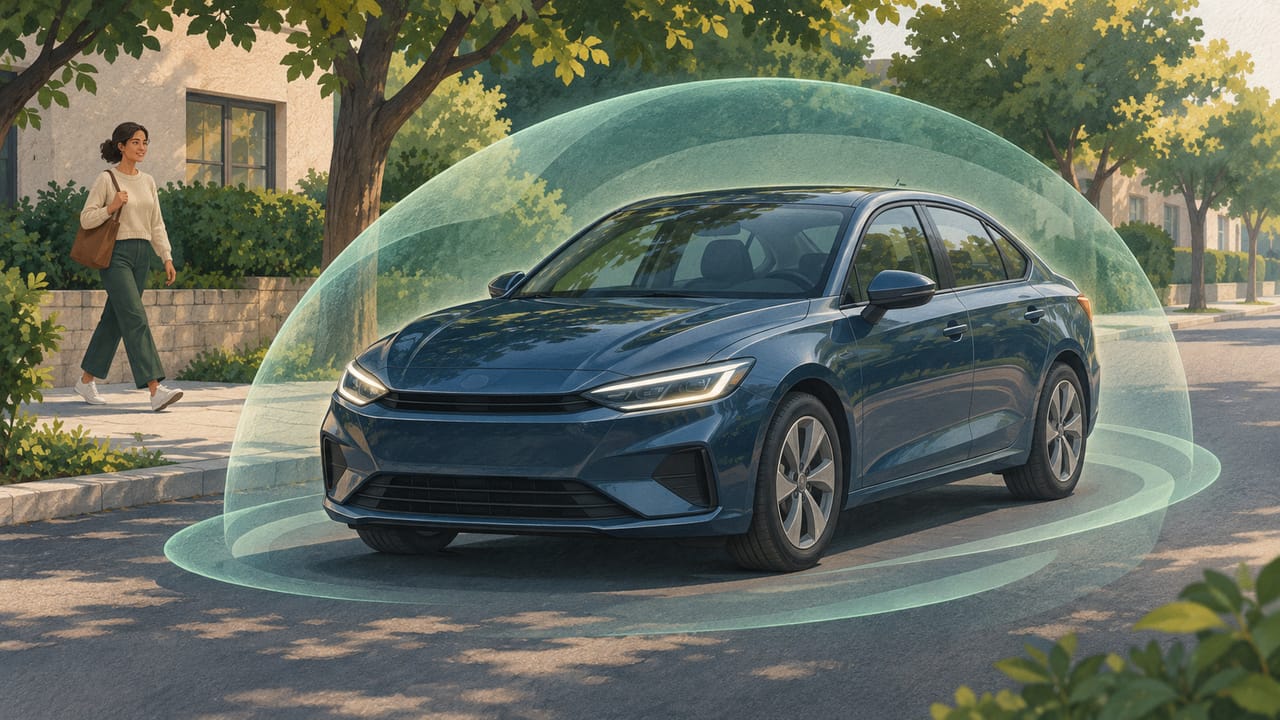
A car’s safety record is more than a single row of stars. For a 2027 vehicle, check occupant crash protection, pedestrian protection and driver assistance separately, then confirm the equipment on the car you plan to buy.
Start with the exact vehicle
Search the NHTSA ratings page by model year, make and model. Select the body style and other details that match the vehicle. Compare the result with the window sticker and the seller’s equipment list. A similar name alone does not establish that two versions have the same rating or equipment.
A testing list is not a test result
On October 15, 2026, NHTSA named vehicles selected for 2027 testing. Its list covers separate crash, pedestrian protection and driver assistance evaluations. The agency says it will post results after testing and quality control. Selection alone does not tell you whether a vehicle passed or how many stars it earned.
Published result
Read the result for the specific assessment and vehicle.
Pending or missing
Treat it as unknown. Return later or compare other available evidence.
Selected for testing
The agency plans an evaluation. This is not a passing result.
The three lists do not necessarily contain the same vehicles. A vehicle can have a result in one area while another assessment is unavailable. Do not fill that gap with an assumption.
Read beyond the overall stars
NHTSA’s overall score combines information from frontal and side crashes and rollover resistance. Five stars is the highest rating, and one is the lowest. Open the individual results to see which crash scenario and seating position each score describes. The test descriptions explain what the agency measures.
| Result | What to examine |
|---|---|
| Frontal | Driver and front passenger protection in a frontal test. |
| Side | Protection in side-impact tests. |
| Rollover | Resistance to rolling over in a single-vehicle crash. |
For frontal crash ratings and overall scores, NHTSA says to compare vehicles in the same weight class and within 250 pounds. Side and rollover ratings can be compared across classes. A star rating describes performance in specified tests, not a guarantee of an outcome in every crash.
Also look for a safety concern symbol. NHTSA says a vehicle can earn a high overall score and still have a safety concern, such as a door opening during a test. Read the concern rather than relying on the overall score alone.
Check protection for people outside the car
On September 18, 2026, NHTSA released its first pedestrian protection results for 2027 models. The assessment examines impacts to the hood, windshield area, hood edge and bumper using head and leg test devices. It addresses how the vehicle’s design may reduce injury in a collision.
NHTSA says a yellow box on a vehicle’s rating page shows whether it passed or failed the criteria, or whether the result is pending or not submitted. Pending and not submitted are not the same as a failure. Check the specific vehicle rather than assuming that every 2027 model has a result.
Separate warnings from automatic action
Advanced driver assistance systems use features such as alerts, braking or steering support. NHTSA’s technology guide explains the differences. Names and equipment packages vary, so ask exactly what the vehicle includes and check the owner’s manual for operating conditions.
Warning
- Forward collision warning alerts the driver. It does not itself take action to avoid a crash.
- Blind spot warning alerts the driver to a detected vehicle in an adjacent lane.
Intervention
- Automatic emergency braking can apply the brakes when a forward collision is imminent.
- Blind spot intervention can apply brakes or provide steering when a lane change threatens a collision.
A feature’s presence is different from a published NHTSA assessment of its performance. Check both when available. These systems assist the driver and have operating limits. Stay responsible for steering, braking and observing the road.
Make a comparison you can use
Suppose two fictional 2027 compact cars are in the same weight class and weigh 3,100 and 3,300 pounds. Their 200-pound difference falls within NHTSA’s 250-pound comparison limit for frontal ratings and overall scores. That makes those ratings suitable for comparison under the agency’s rule, but it does not decide which car is best for your household.
Compare each crash result
Record the overall score and the frontal, side and rollover results. Read any safety concern.
Check pedestrian protection
Record pass, fail, pending or not submitted. Do not turn an unavailable result into a score.
Confirm equipment
Ask the seller which assistance features are included on each specific car and whether the agency has assessed them.
Check your needs
Try your usual seating position, visibility and child-seat installation if relevant. Keep the written equipment list with your notes.
If one car lacks a result, record that gap. A stronger result in one test does not establish that the same vehicle leads in every other assessment. Use the separate results alongside fit, cost and the equipment actually installed.
Source notes
Sources checked November 2, 2026. NHTSA may add or revise individual results after this date. Check the current vehicle page before making a decision.
NHTSA first pedestrian protection results
Frequently asked questions
Does selection for the 2027 test list mean a car passed?
No. Selection identifies a vehicle for an evaluation. Check the individual vehicle page for a published result after testing and quality control.
Can I compare a small car with a large SUV using frontal stars?
NHTSA says to compare frontal ratings and overall scores for vehicles in the same weight class and within 250 pounds. Side and rollover ratings can be compared across classes.
Is pedestrian protection the same as pedestrian automatic emergency braking?
No. Pedestrian protection addresses injury risks in an impact. Pedestrian automatic emergency braking is an assistance feature intended to help avoid or reduce an imminent collision.
Does a five-star rating guarantee safety?
No. Ratings describe performance in specified tests. Read the individual crash results, any safety concern and the separate assessments for the vehicle.